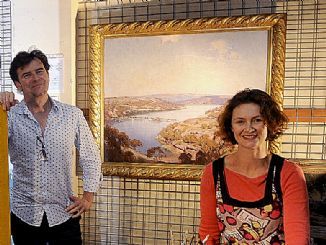
David Hulme’s recent conversation on ABC Radio National’s Critics Corner explored a question that can catch families by surprise: what do you do when the art your parents spent years collecting suddenly becomes yours? David, a fine art valuer and co-founder of Banziger Hulme Fine Art Consultants, discussed the challenges of inherited art. Listen to David’s discussion on ABC Radio National.
You might love a painting because you grew up with it hanging in your lounge room. You might also inherit works you would have never chosen yourself. Neither of these things can tell you their market value, but both matter when deciding their future.
Separate what it means from what it is worth.
Sentimental value belongs to the people who know an artwork’s story. Market value is what it could reasonably sell for in the relevant market at a particular date. A work can mean a great deal to a family while attracting little interest from buyers.
It helps to ask two separate questions: which works matter personally, and which need a professional assessment of value? A modest valuation does not diminish a family connection. Equally, a painting nobody wants to hang at home may still have financial value.
An old purchase price is only part of the picture.
What your parents paid is a useful background, but it does not establish what a work is worth now. Buyer demand can change, and individual artworks do not all follow the same path. Some may be worth less than their original purchase price.
A professional valuation considers the particular work, including its artist, medium, condition and documented ownership history, alongside relevant sales evidence. An old insurance valuation measures something different: the cost of replacing a work is not necessarily what it would sell for.
Our art appraisals and valuations begin by establishing why you need a valuation, so the assessment answers the right question.
Keeping, sharing and selling involve different decisions
There does not have to be one answer for the entire collection. You may want to keep some works in the family and explore selling others. Start with the decisions in front of you:
- Keeping: Which works would you like to live with, and what insurance arrangements need reviewing?
- Sharing: Which beneficiaries are interested in particular pieces, and are their values understood?
- Selling: Is there a realistic market, and how might selling fees, transport and other costs affect the amount received?
The practical work of taking on a collection was part of the wider issue explored in David’s ABC conversation. Allow time for research, family discussions and arrangements for the artworks, even with a small collection. A market valuation helps you weigh up a possible sale; the eventual price will depend on buyer demand and how and when the work is sold.
Fair distribution needs more than counting paintings
Giving each beneficiary the same number of artworks does not necessarily give each the same financial value. Several modestly valued works may together be worth less than a single painting.
An independent valuation provides a shared reference point for those conversations, explaining the assessed values and the evidence behind them. This helps families distinguish personal preferences from financial considerations. The executor can then consider those values alongside the will and advice from the estate’s solicitor.
Our deceased estate art valuations support executors, solicitors and families with probate, estate administration and fair distribution. Before arranging a report, ask the estate’s solicitor what it needs to cover and which valuation date to use. A valuation for probate may need to establish what an artwork was worth at an earlier date, rather than what it might sell for today.
When should you seek an independent valuation?
An independent valuation is useful when the family is unsure what the collection is worth, beneficiaries need a consistent basis for comparison, or an executor or adviser requires a written report. Not every inherited artwork needs a formal valuation, so an initial conversation can help you decide.
At Banziger Hulme, we assess fine art and collections using research and relevant market evidence. Photographs and available records help us understand the artworks and what you need. Where these provide enough evidence, we can value works remotely. Some artworks require an on-site inspection.
If you have inherited artworks or are managing a deceased estate, contact Banziger Hulme to discuss the collection and whether a professional valuation is appropriate for the decisions ahead.